
Los Banos City Directory Collections
Tracing a household in Los Banos often means working through volumes. These were published under a county name. A Los Banos city directory search pulls from Merced County titles. Their covers rarely mention the town, so the work starts with reading each volume's scope and abbreviation key. The museum, the Merced Main Library, local genealogists, and catalog services each hold a piece. Names, streets, occupations, and town sections all serve as entry points. That divided, scope-checked effort pays off. It is how a family, business, or neighbor lands in a year no modern resident lookup covers.
| Collection | Years verified | Where held | Access |
|---|---|---|---|
| Merced County Business Directory | 1877; 1884-1885 | Courthouse Museum | Research room |
| Polk California State Gazetteer | 1890 | Courthouse Museum | Research room |
| Polk Merced City Directory | 1914; 1928-29; 1930-31; 1935; 1938; 1941; 1963; 1966 | Museum | Ask whether Los Banos is included |
| Polk Merced-Atwater Directory | 1971; 1972; 1980; 1988; 1989 | Museum | Check county sections |
| Other Polk Merced runs | Not fully enumerated | Merced Main Library | Reference-desk verification |
| Polk Merced-Madera reports | 1938; 1941; 1946; 1948; 1952-55; 1960 | Catalog references | Verify title page and image access |
| Los Banos city directory report | 1967 reported | Ancestry city-directory collection | Library or subscription access varies |
These holdings do not form one continuous Los Banos run. A gap can mean a lost volume, a year the library never listed, a changed title, or wider geographic scope. So a bare spot on the shelf proves nothing about whether a resident directory existed.
Los Banos Directory Years at Museum
The museum's 1875 building gives the directory trail a physical home. Its archive sits next to Merced Main Library at 21st and N Streets. Hours run Wednesdays from 10 to 2, or by appointment. Beyond directories, the collections hold photographs, maps, and newspapers. Manuscripts cover families, towns, schools, agriculture, irrigation, and transportation. That range widens a Los Banos city directory search. A single name can reach the whole setting around it. Work from the oldest fitting title first. The 1877 and 1884-85 county business directories can anchor a person or firm. They fix the trade and the town. The 1890 gazetteer adds state and regional business context. Polk Merced issues cover selected city and county years. The later Merced-Atwater issues may require a town or county section check. Photograph the title and scope pages before copying entries.
The Merced County Courthouse Museum archive inventory is the source for the verified directory list and research-room route.
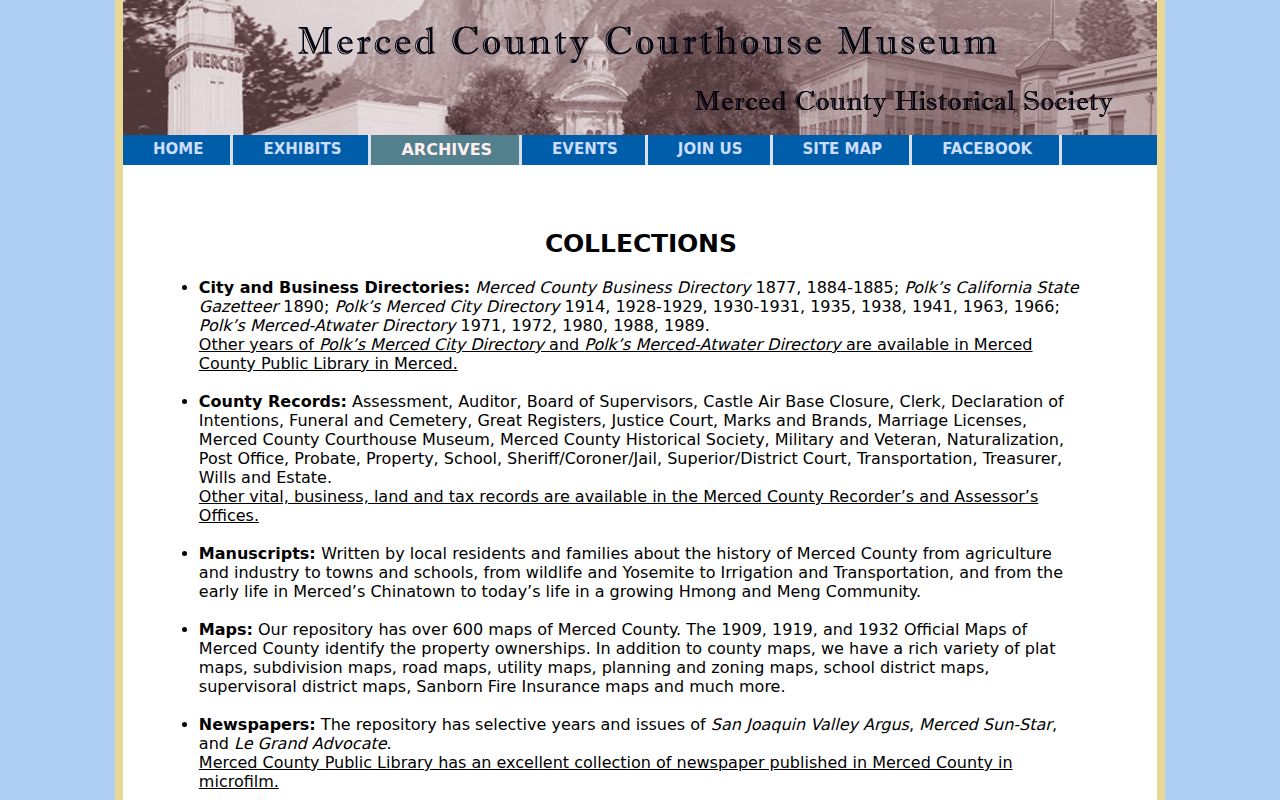
Because the museum collects countywide, a Los Banos entry can hide inside a volume bearing another place name on its cover.
Los Banos Directory Help at Merced
When the museum list points to an unenumerated Polk run, help is close at hand. The Merced Main Library Genealogy Room is the next stop. Volunteers from the Merced County Genealogical Society assist on request, according to the county page. Closer to home, the Los Banos Branch Library at 1312 South Seventh Street has plenty to offer. It provides catalog help, newspapers, interlibrary requests, and public computers. The Los Banos California Genealogical Society rounds out the referrals. It adds family histories, cemetery transcriptions, and obituary leads. Before driving anywhere, call ahead. Give the exact title, city form, year, and surname. Ask whether the item sits at Los Banos Branch, Merced Main, or the museum. Also ask whether it is open shelf, microfilm, reference-only, or a staff-assisted request. That one phone check can save time. It can spare a long west-side trip for a book housed elsewhere or kept under limited hours.
The Merced County community-support page gives the library genealogy-room and volunteer information.
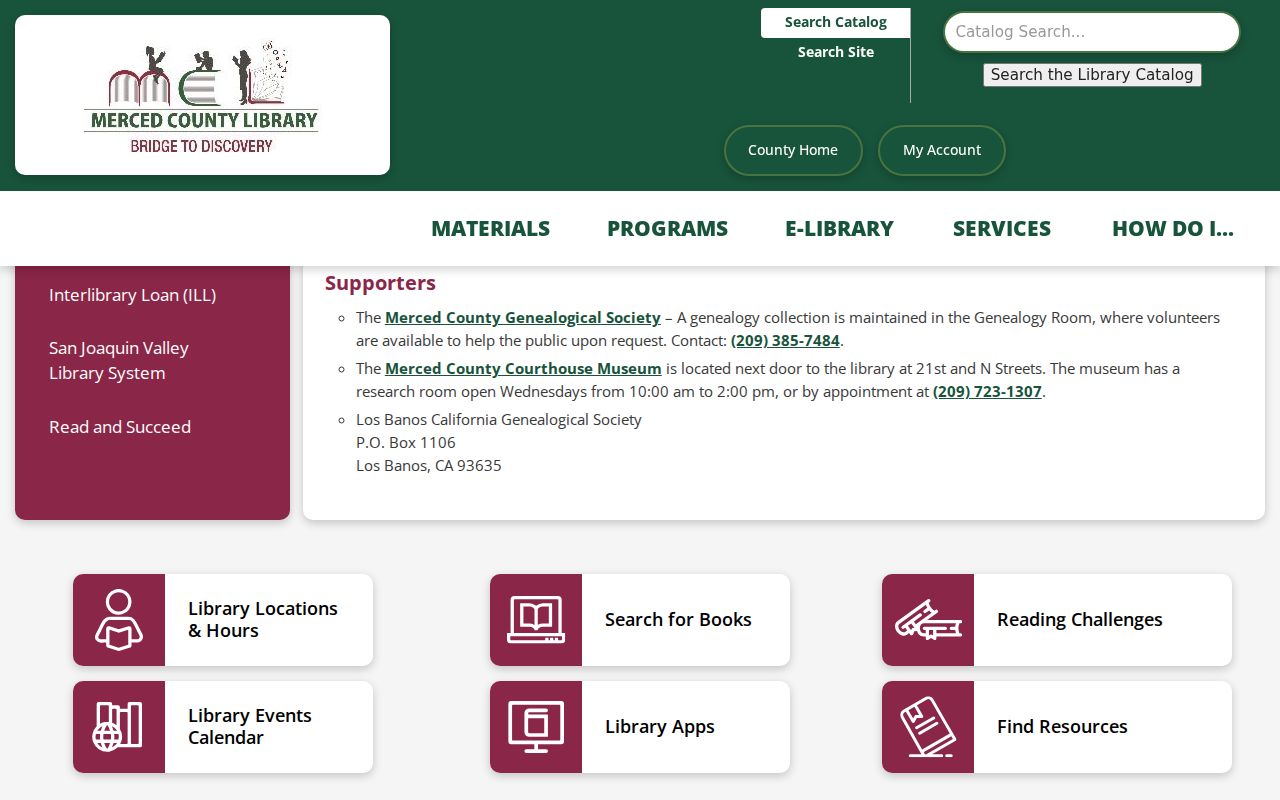
Reference help carries real weight here, because the official pages publish no full shelf list, no newspaper microfilm run, no obituary-index title, and no licensed database roster.
Reading a Los Banos City Directory Entry
Every Los Banos city directory entry is a dated bundle of clues. An alphabetical listing may carry a surname, a given name or initial, and a spouse in parentheses. It may also list an occupation, an employer or business, and a residence address. The authoritative museum page does not open a scan of a local entry. Verify the volume's own key before quoting any mark. A street section then places that same household in address order.
| Entry part | What to record |
|---|---|
| Name | Surname, given name, initials, spouse, and alternate forms. |
| Occupation | Trade or role, with employer or firm when printed. |
| Address | House number, street, town section, and any rural-route form. |
| Household mark | h, r, wid, or another symbol only after checking that volume's key. |
| Business section | Firm, category, proprietors, officers, telephone, and address. |
- Criss-cross section
- An address-order section that lets a researcher move from street to occupant.
- Householder index
- A name or address aid that gathers the principal entries used by the volume.
- Abbreviation key
- The guide that explains short marks and should be photographed before the entry pages.
A household entry can omit children, other adults, renters, or boarders. A missing name does not mean the person never lived there. And an h or r mark is only a directory convention, never a modern legal determination of owner or renter.
Los Banos Directory Names Versus Street Order
Alphabetical searching starts with a person. Criss-cross searching starts with an address. The reversal earns its keep in Los Banos when a family lived on a known street. The surname may be misspelled, shortened, or missing from the index. Go to the town and street section. Follow the odd and even sequence, and note cross streets where the volume uses them. Run both paths in the same issue. The alphabetical page may add a spouse, occupation, or firm. The street page may reveal a neighboring business or a gap in the sequence. Then set the address beside a map, deed, or census enumeration. Never assume a street-order occupant owns the property. The historical directory's value lies in recording presence in a given edition. That includes people an ownership index would skip. If a volume lacks a criss-cross section, begin with a known surname. Then work across nearby issues. Record the exact page, title, edition, and mark each time. A later directory may spell the street differently. It may also shift the same place into a countywide section.
Using Los Banos Directories for Family History
Work with dated observations in order. That is how a Los Banos residents directory reveals a household over time. Start from the year you already know, whether a person or an address anchors it. Then move one edition back and one forward, recording every address, spouse, occupation, and gap. Each change deserves a partner record. So pair it with a deed, a tax clue, a newspaper item, or a family paper. A directory entry is one observation. It is never a whole life story.
- Photograph the title page, scope statement, publisher, edition, and abbreviation key.
- Search the surname, given-name initials, spouse, birth surname, and both Los Banos and Los Baños forms.
- Check the street or criss-cross section for the address, nearby entries, and changes in street order.
- Move to the next earlier or later edition and write down the same fields, including a missing entry.
- Compare the sequence with census, deed, vital, obituary, probate, and cemetery clues.
A disappearance has many causes. The household may have moved, or a death may explain it. An edition may have been skipped, the publisher's coverage may have shifted, or the index may simply miss the name form used. Obituaries and probate clarify deaths and heir transfers. A deed explains a sale. The residents directory alone cannot settle which answer fits, so treat every absence as a question rather than a conclusion.
Pair Los Banos Directories With Census
Federal census schedules give household snapshots through 1950, and the 72-year rule governs anything later. A census lists neighbors in enumeration order. A city directory fills the years between census decades, which makes the two sources natural partners. Their geography differs, though. Enumeration districts shift over time, while a directory may organize by town or rural route instead. Build a time window from the directory first. Then find the matching census year and enumeration area. Compare names, ages, relationships, occupations, and address clues side by side. A disagreement is not a failure. It may signal a move, a lodger, a new spouse, a spelling change, or an address given as a route rather than a street number. Note the source and page for every claim.
The National Archives census research page explains the federal schedules and the public-release framework used for historical household work.
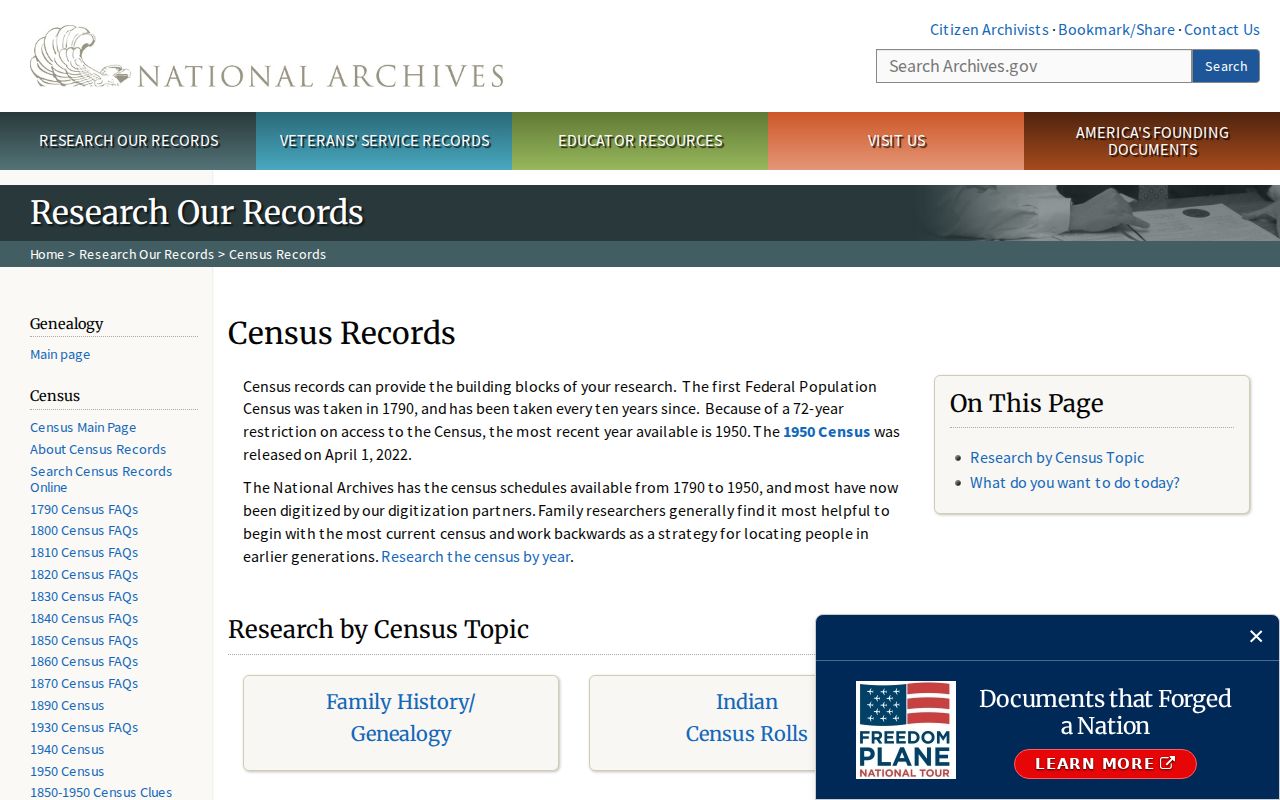
Remember what each record is. The census is a dated snapshot, not a replacement for the annual or intermittent directory record of Los Banos households.
Los Banos Directory Names OCR Misses
Spelling is the first trap. Search forms usually take the unaccented postal form Los Banos. Newspapers and family papers often carry Los Baños. Keep both in your notes. Preserve compound surnames, maternal or birth surnames, initials, and alternate spellings across the whole residents directory run. Portuguese, Spanish or Mexican, Basque, Punjabi or South Asian, and other Central Valley family lines can carry more than one naming pattern in a single book. Treat a surname as a search clue only, never as a basis for assigning ethnicity. OCR creates its own noise. It can split a surname, turn a number into a letter, or drop a diacritic. When a search result looks thin, check the image or the physical page. Search the spouse instead. Try the occupation, the employer, or the business. The street and the neighboring entry can help too. An old rural route is often steadier than a later city address. A tract name can tie a new street back to an older farm or ranch description. The FamilySearch catalog also lists Merced County deeds, probate, marriage, and naturalization books. That adds a second source. Some images carry access rules. A catalog hit is not the same as an open scan.
The FamilySearch Merced County catalog is a useful way to test related county record books and directory references.
Let the catalog point to a possible record set. Then confirm where the image can be read and under what access rule it sits.
Los Banos Business Directories and Family History
The oldest directory holdings are not all household books. The 1877 and 1884-85 Merced County Business Directories sit beside an 1890 gazetteer. Together they place a firm, a trade, or a town service in the same local world as a family. Museum manuscripts can then widen the picture. They cover agriculture, schools, irrigation, transportation, or community history. Here a city directory becomes more than a name lookup. It becomes a portrait of a town's working life. Trace a business entry by its proprietor, address, category, and nearby institutions. Compare it against a county FBN or a state business filing. A newspaper notice or a later residents directory edition also helps. A business address is not a residence. Still, it can pin down the right family, spelling, or time window. Silence in a directory may not mean a change in the person's life. It may reflect a change in publication scope. For a current identity check after a historical find, turn to a separate official record. A court index, a parcel, or a vital record answers the present-day question. The historical shelf only tells what a directory printed in a given year.
Los Banos Directory Clues Need Corroboration
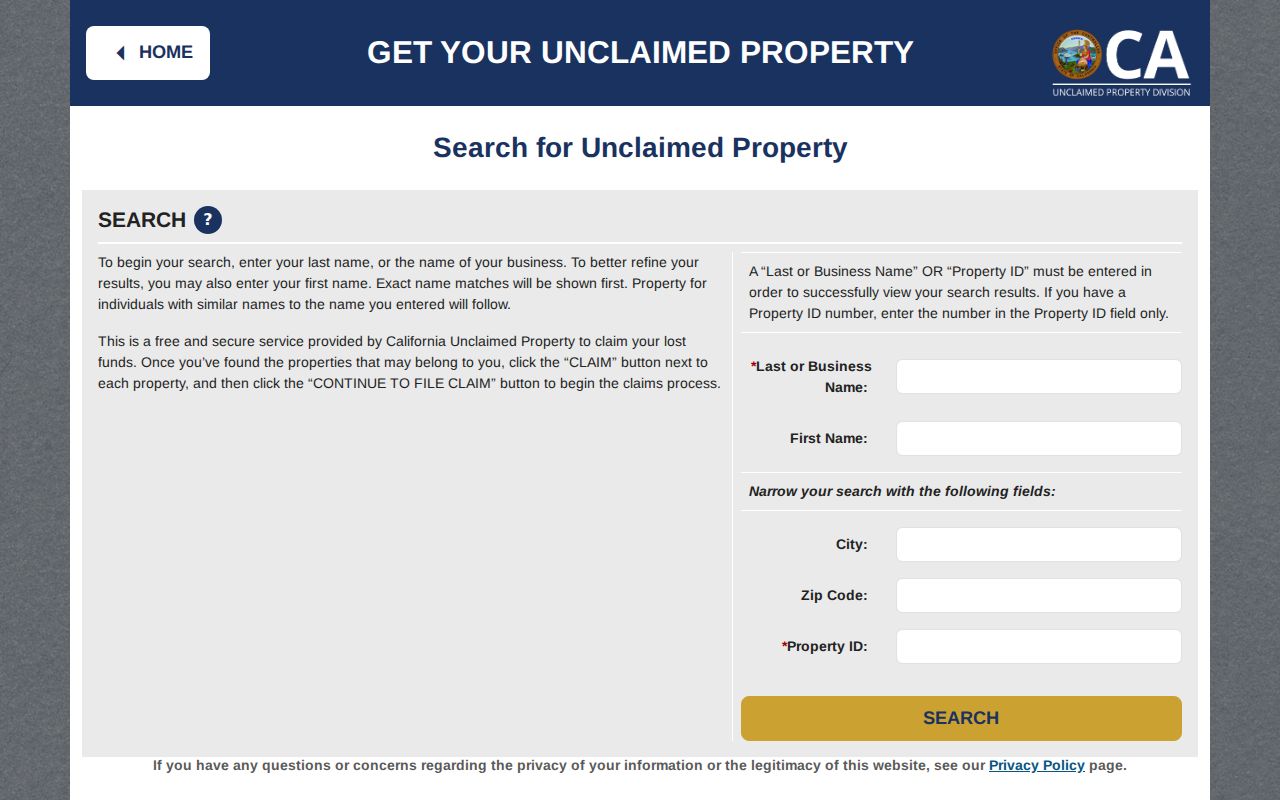
A former city or ZIP can help separate two people who share a name. It is not, however, a directory of current residents. California's official unclaimed-property search accepts a last or business name or property ID. First name, city, and ZIP serve as refiners. A result can hint at a former Los Banos connection. It proves no current address, parcel interest, or family relationship. Use the California ClaimIt search as one narrow cross-check. Do this after the residents directory supplies a name and a time window. Match any clue against a deed, obituary, business filing, or family record before drawing conclusions. The claim process handles proof securely. The public result is a lead, not a contact list.
The California unclaimed-property search demonstrates the city and ZIP refiners that can help distinguish same-name records.
A cross-check is useful only when its limits stay attached to the result.